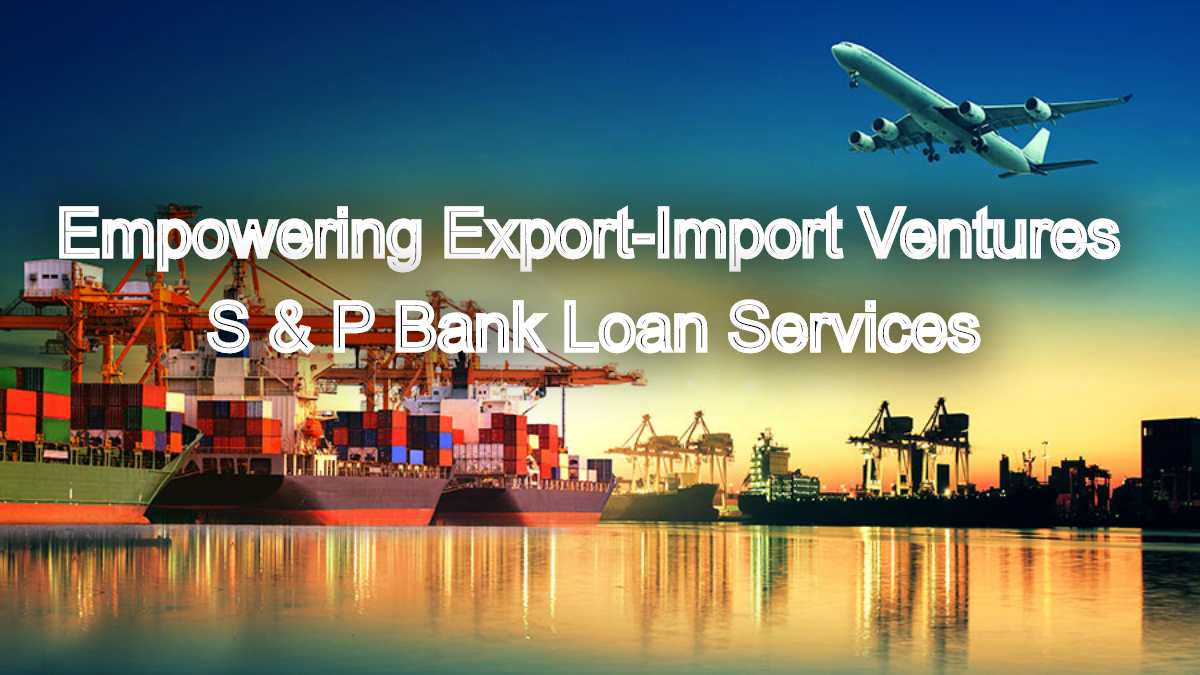
The Best Loan Consultancy Services: Empowering Export-Import Ventures
In this article
- The Dynamics of Export-Import Finance
- Pre-Shipment Finance: Fueling Production
- Post-Shipment Finance: Bridging Payment Gaps
- Trade Finance Instruments and Risk Mitigation
- Government Initiatives and Support
- The Role of a Loan Consultancy Service
- Empowering Export-Import Ventures
- Handcrafted textiles as an export line
- Frequently Asked Questions
The Best Loan Consultancy Services: S & P Bank Loan Services understands the critical role of robust financial backing in the dynamic world of export-import. Indeed, cross-border trade demands precise financial planning. Consequently, securing optimal loan facilities is not merely an advantage. It is an absolute necessity. Therefore, our consultancy empowers businesses. We navigate complex financial landscapes. We ensure ventures are not just funded but truly flourish. Our expertise elevates your global trade ambitions.
The Best Loan Consultancy Services: Empowering Export-Import Ventures: S & P Bank Loan Services
The Dynamics of Export-Import Finance
Export-import ventures inherently involve intricate financial dynamics. Firstly, these businesses require substantial working capital. This capital supports various operational stages. For instance, it covers procurement of raw materials. It also funds manufacturing processes. Furthermore, it manages logistics and shipping. Secondly, international trade exposes businesses to foreign exchange risks. Currency fluctuations can significantly impact profitability. Thirdly, there are payment risks. Overseas buyers may delay or default on payments. Consequently, specialized financial instruments are crucial. These instruments mitigate risks. They also ensure liquidity. Therefore, understanding pre-shipment finance, post-shipment finance, and various trade finance mechanisms is paramount.
Pre-Shipment Finance: Fueling Production
Pre-shipment finance provides crucial liquidity before goods are dispatched. It helps exporters meet their production and procurement needs. For example, it covers the cost of raw materials. It also funds labor expenses. Furthermore, it supports packaging and transportation to the port.
Several forms of pre-shipment finance are available. Packing Credit is a common facility. Banks extend this credit against confirmed export orders or Letters of Credit (LCs). It can be provided in Indian Rupees or foreign currency. Another vital instrument is Advances against Duty Drawback or other export incentives. These advances offer immediate funds. They are against future receivables from government schemes. Moreover, Pre-shipment Credit in Foreign Currency (PCFC) helps mitigate exchange rate risks. It allows exporters to borrow in the currency of the export contract. Therefore, understanding these options is vital. It optimizes the cost of finance.
Post-Shipment Finance: Bridging Payment Gaps
Post-shipment finance addresses the funding gap after goods are shipped. It covers the period until the exporter receives payment from the overseas buyer. This type of finance is crucial for maintaining healthy cash flow. It prevents liquidity crunches.
Key post-shipment finance options include Export Bill Negotiation/Discounting. Here, banks purchase or discount export bills drawn under LCs or export contracts. This provides immediate cash to the exporter. Advances against Bills Sent for Collection offer funds against bills where payment is to be collected later. Forfaiting is another powerful tool. It involves the purchase of trade receivables by a forfaiter (usually a bank) without recourse to the exporter. This eliminates collection risk and political risk. Furthermore, Export Factoring allows exporters to sell their accounts receivable to a factoring company at a discount. This provides immediate working capital. Therefore, choosing the right post-shipment finance mechanism depends on the payment terms and risk appetite.
Trade Finance Instruments and Risk Mitigation
Beyond traditional loans, various trade finance instruments mitigate risks inherent in international trade. Letters of Credit (LCs) are fundamental. An LC is a bank’s undertaking to pay the exporter. This payment occurs upon presentation of specified documents. It guarantees payment, reducing buyer default risk. Similarly, Bank Guarantees provide assurance. They ensure a party fulfills its contractual obligations.
Export Credit Insurance, typically offered by agencies like ECGC (Export Credit Guarantee Corporation of India), protects exporters. It safeguards against non-payment risks from overseas buyers. These risks can stem from commercial or political factors. Furthermore, Currency Hedging strategies are vital. Forward contracts and options can be used. These instruments lock in exchange rates. Consequently, they protect against adverse currency movements. Thus, a comprehensive risk mitigation strategy involves combining these financial tools.
Government Initiatives and Support
The Indian government actively supports export-import ventures. Various schemes and institutions facilitate access to finance. The Export-Import Bank of India (EXIM Bank) is a premier financial institution. It provides a wide array of financial products and advisory services. These include lines of credit to overseas entities. They also offer project export finance. Furthermore, EXIM Bank supports Indian companies investing abroad.
The Reserve Bank of India (RBI) regulates export credit. It issues guidelines for commercial banks. These guidelines ensure adequate and timely availability of credit. The Interest Equalization Scheme provides interest subvention. It makes pre-shipment and post-shipment rupee export credit more affordable. Moreover, schemes like the Merchandise Exports from India Scheme (MEIS) and Services Exports from India Scheme (SEIS) (now replaced by RoDTEP/RoSCTL) offered incentives. These incentives helped offset infrastructural inefficiencies. Consequently, understanding these government-backed programs is crucial for optimizing financial benefits.
The Role of a Loan Consultancy Service
Navigating the labyrinth of export-import finance demands specialized expertise. This is precisely where S & P Bank Loan Services adds immense value. We function as a bridge between your venture and potential financiers. Our consultancy provides comprehensive guidance.
Firstly, we conduct a thorough financial health assessment. This identifies your specific funding requirements. We analyze your business model. We also assess your risk profile. Secondly, we prepare a robust project report and financial projections. These documents present a compelling case to lenders. Thirdly, we identify the most suitable financing options. This includes commercial banks, EXIM Bank, and other financial institutions. We consider your unique needs.
Furthermore, we assist with loan application preparation. This ensures all documentation is accurate and complete. We help you meet eligibility criteria. We also streamline the entire application process. Our experts engage in negotiations with banks. We aim to secure favorable terms and interest rates. Clarify complex clauses. We also ensure transparency in loan agreements. Consequently, we simplify the entire financing journey. We empower businesses to focus on their core operations. Our role extends beyond merely connecting. We actively empower.
Empowering Export-Import Ventures
Our core mission at S & P Bank Loan Services is empowerment. We equip export-import businesses with the financial tools they need to succeed globally. We help them overcome common financial hurdles. These include working capital shortages. They also encompass foreign exchange volatility. Furthermore, we address payment delays.
We work with a diverse clientele. This ranges from emerging enterprises to established corporations. Our tailored solutions cater to specific industry needs. We assist manufacturers, traders, and service providers. Our consultancy aims to optimize capital structure. We also enhance financial resilience. By securing the right financial products, businesses can expand their market reach. They can undertake larger orders. They can also invest in new technologies. Thus, we facilitate sustainable growth. We transform financial challenges into strategic advantages.
Handcrafted textiles as an export line
Hand embroidery such as aari and zardozi work has steady demand in overseas markets, and small units can use pre-shipment finance to fund materials and labour for confirmed orders. Skilled artisans are the foundation of such a unit, and training in aari embroidery is a practical starting point.
Frequently Asked Questions
What is pre-shipment finance, and why is it important for exporters?
Pre-shipment finance provides crucial liquidity to exporters before goods are dispatched. It is important because it covers the costs of production, procurement of raw materials, labor expenses, and transportation to the port, ensuring the exporter has sufficient working capital to fulfill confirmed export orders or Letters of Credit.
How does post-shipment finance help export-import businesses?
Post-shipment finance bridges the funding gap after goods are shipped but before the exporter receives payment from the overseas buyer. It is vital for maintaining healthy cash flow, preventing liquidity crunches, and allowing businesses to operate smoothly during the payment collection period, utilizing tools like export bill negotiation or factoring.
What role do instruments like Letters of Credit (LCs) and Bank Guarantees play in export-import finance?
Letters of Credit (LCs) and Bank Guarantees are crucial trade finance instruments that mitigate risks. An LC is a bank’s undertaking to pay the exporter upon document presentation, guaranteeing payment. Bank Guarantees assure that a party fulfills its contractual obligations, collectively reducing buyer default and performance risks in international trade.
How does S & P Bank Loan Services assist businesses in securing export-import loans?
S & P Bank Loan Services assists by conducting financial health assessments, preparing robust project reports and financial projections, identifying suitable financing options from various institutions, and meticulously preparing loan applications. Our experts also engage in negotiations with banks to secure favorable terms and streamline the entire financing process for our clients.
What government initiatives support export-import ventures in India regarding finance?
The Indian government supports export-import ventures through institutions like the Export-Import Bank of India (EXIM Bank), which provides diverse financial products. The Reserve Bank of India (RBI) regulates credit. Schemes like the Interest Equalization Scheme and erstwhile MEIS/SEIS (now RoDTEP/RoSCTL) offer incentives, making export credit more affordable and offsetting operational costs for businesses.
Conclusion
The success of any export-import venture hinges significantly on robust financial support. Understanding and accessing the right loan facilities is paramount. S & P Bank Loan Services stands as your trusted partner in this endeavor. We bring unparalleled expertise in export-import finance. We offer a holistic suite of consultancy services. From identifying optimal funding sources to meticulous application preparation and expert negotiation, we guide you every step of the way. Therefore, we empower your business. We help you navigate the complexities of international trade finance with confidence. Partner with S & P Bank Loan Services. Unlock your venture’s full global potential. We translate financial aspirations into tangible achievements.
Read More
- Fueling Entrepreneurial Dreams: Startup Loans by The Best Loan Consultancy Services
- Monetizing Home Equity: Reverse Mortgage Loans by The Best Loan Consultancy Services
- Going Green: Green Loans by The Best Loan Consultancy Services
- Smooth Transition: Bridge Loans with The Best Loan Consultancy Services
- Flexible Borrowing: Overdraft Facilities by The Best Loan Consultancy Services
- Directorate General of Foreign Trade (DGFT):